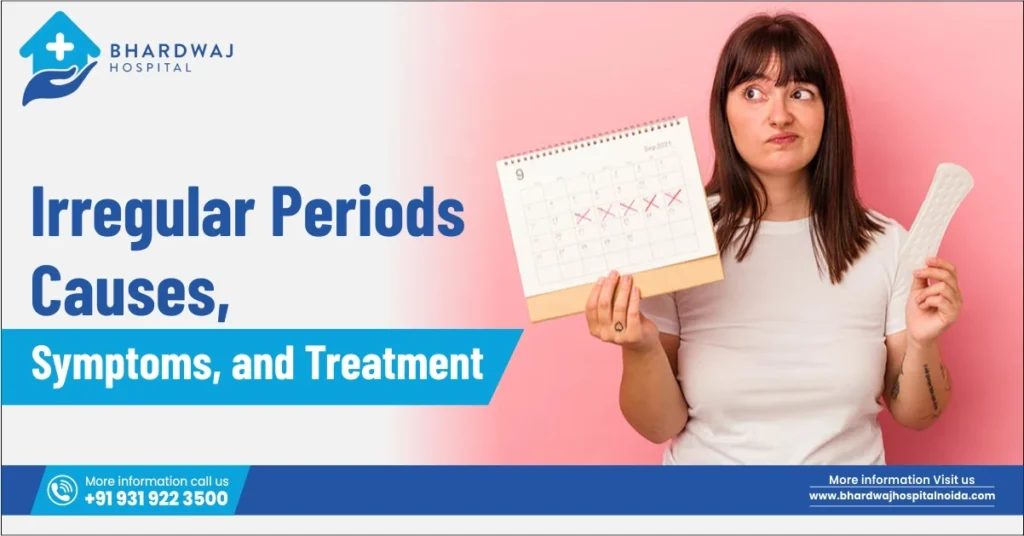
Every woman’s biological system is unique, and so is her menstrual cycle or periods. When you have a normal, moderately pain-free period every month, it’s a prominent indication that your reproductive system is working accurately. However, the opposite also must be taken into account when your cycle is longer or shorter than the standard range of 21 to 35 days, or the bleeding is more or less than usual, which implies that you have irregular periods. The fact that one has an irregular or unpredictable period is not rare, and it does not imply that it is clinically healthy.
According to the American Academy of Family Physicians, around 9 to 14% of women experience irregular periods in the first few years after puberty and also before menopause. But the problem arises when you are at your peak, between 20 and 40, and experiencing irregular periods. If this is the case with you, then book an appointment with any of our gynaecologists at Bhardwaj Hospital for an accurate diagnosis and treatment.
Symptoms Associated with Irregular Periods
Irregular menstruation involves polymenorrhea (short-duration cycles) or oligomenorrhea (extended intervals). This abrupt fluctuation typically stems from the hypothalamic pituitary ovarian deregulation. If your period cycle is coming once every 2 or 3 months and alongside you are experiencing all or some of these symptoms mentioned below, then surely your irregular period condition has reached a further stage. Before further progression, it is better if you book a gynaecological appointment at Bhardwaj Hospital and start adequate treatment.
-
Menstrual Symptoms
Primary indicators include metrorrhagia, which is characterized by abnormal bleeding or spotting. Furthermore, patients also experience menorrhagia that involves uncontrollable endometrial shedding and prolonged duration of flow. On the other hand, hypomenorrhea is explicable as unusual light menstrual discharge. Thus, such abnormalities are often accompanied by an anovulatory cycle that may hamper fertility.
-
Physical Symptoms
Localized uterine distress often leads to the manifestation of dysmenorrhea, which is caused by increased uterine prostaglandin levels. Consequently, patients report sharp cramping in their pelvic area. Additionally, hormonal fluctuations also trigger mastalgia that results in notable breast pain. Some women also experience hirsutism or acne because of a high proportion of androgen hormones.
-
Systemic Symptoms
Systematic, continuous blood loss also induces iron-deficiency anemia, leading to profound fatigue. Fluctuations in estradiol and progesterone levels disrupt thermoregulation and sleep patterns. Moreover, patients also experience hemicrania or tension-related headaches during hormonal shift. Lastly, peripheral edema occurs due to considerable fluid retention.
Common Causes of Irregular Periods
Multiple factors are responsible for the occurrence of irregular menstrual cycles. Some notable causes are discussed below.
-
Hormonal imbalance and PCOS
Menstrual regularity is highly coordinated by progesterone and estradiol. Polycystic Ovary Syndrome (PCOS) and high levels of androgens are one of the top disruptors. These ovarian follicles do not mature due to a hormonal surge. This results in patients becoming anovulated and having infrequent or no periods. Moreover, these endocrine abnormalities may be worsened by the resultant insulin resistance.
-
Thyroid and Glandular Disorders
With an adequate proportion of thyroxine in your body, there is appropriate metabolism maintenance. When you are struggling with either hypothyroidism or hyperthyroidism, it creates a major impact on the reproductive hormonal metabolism. For example, low thyroid levels are responsible for the disruption of gonadotropin-releasing hormone secretion. This severe damage leads to excessive or minimal blood flow during periods.
-
Stress and Lifestyle Factors
Excessive physiological or psychological stress results in excess stimulation of the hypothalamic pituitary adrenal (HPA) axis. This stimulation elevates the amount of cortisol that has the power to suppress the secretion of luteinizing hormone (LH). Also, functional hypothalamic amenorrhea can be caused by extreme changes in weight or excessive physical activity. If your body undergoes a major calorie deficiency, it affects your reproductive health, and your menstrual cycle becomes irregular.
-
Pregnancy, Breastfeeding, and Perimenopause
With changes in your reproductive health, menstrual disruptions are commonly noticed. The cycle is completely stopped during pregnancy as levels of human chorionic gonadotropin (hCG) increase. Subsequently, ovulation is suppressed in prolactin during breastfeeding, which is called lactational amenorrhea. On the other hand, perimenopause is associated with a progressive loss in ovarian reserve. The result of this transition is irregular estrogen peaks resulting in longer or shorter period cycles. Eventually, it led to menopause and denotes the stoppage of menstruation.
-
Pelvic Inflammatory Disease and Endometriosis
Irregular uterine bleeding can also be a result of inflammation or structural problems. Because of endometriosis your ovarian tissue grows outside the uterine cavity, which leads to several complications, and one is irregular periods. These ectopic tissues cause severe uterine inflammation and dysmenorrhea. Moreover, irregular periods also occur because of pelvic inflammatory disease, which mainly affects the upper reproductive tract, resulting in frequent blood spotting between cycles and uncontrollable flow during periods.
-
Birth Control and Medication Side Effects
The endometrium and timing of cycles are prone to change with medication interventions. Bleeding can also be caused by hormonal birth control (i.e., IUDs or pills). Consistent intake of these medications can cause amenorrhea meaning no periods at all. Also, some medicines, such as anticoagulants or antipsychotics, disrupt clotting or hormone regulation. These side effects often manifest themselves in the form of sudden alterations in the menstrual period.
-
Primary Ovarian Insufficiency
Primary Ovarian Insufficiency (POI) refers to a disease that occurs when the ovaries cease their functions before 40. This is contrary to premature menopause, as the ovaries may be irregular in functioning. The reduction in estrogen levels in POI patients causes irregular/non-existent periods. This loss of follicles is usually due to genetic causes or autoimmune reactions.
Treatment Options for Irregular Periods
Gynaecologists opt for both medications and surgical measures to treat menstrual disorders. They are directed at normalizing the hormonal balance and repairing structural irregularities. A combined treatment based on medication, surgeries, and lifestyle habits will ensure the betterment of reproductive health. Therefore, going through gynaecological screening at Bhardwaj Hospital can help to detect underlying pathologies earlier.
-
Hormone therapy
Perimenopause leads to unpredictable hormone peaks and declines, and periods are unpredictable. Hormone therapy involves optimization of additional amounts of estrogen and progestin that override these turbulent swings. It replicates the natural rhythm of periods and thus stabilizes the uterine lining so that it sheds regularly. This therapy actually resets the internal menstrual clock, converting abnormal and usually heavy cycles into a regular and predictable monthly cycle.
-
Tranexamic Acid Medications
Tranexamic acid is an effective antifibrinolytic agent in heavy bleeding. It acts by stopping the dissolution of fibrin in blood clots. This is an effective way of minimizing excessive menstrual blood loss in active menstrual cycles.
-
Endometrial Ablation
It is a specific surgical procedure for managing endometrial conditions. Here, gynaecologists use thermal, cryogenic, or radiofrequency energy, which is best suited for patients with severe menorrhagia that has not been managed by medications. After the process, the majority of patients claim an extreme decrease in the blood flow. Others can also be subjected to amenorrhea or total loss of menses. But this surgery is strictly designed for those who do not want to undergo the reproductive cycle again.
-
Hysterectomy
In extreme situations, a hysterectomy is conducted, where the whole uterus is removed through surgery. This is a procedure that is believed to be a final treatment for chronic menstrual disorders. It is usually recommended when there are uterine fibroids or progressive adenomyosis. Gynaecologists conduct this treatment either laparoscopically or with open abdominal procedures. It is an efficient procedure but a crucial operation that requires significant recovery afterward.
-
Antibiotics and Pain Killers
Sometimes, short term irregular periods occur because of an infection in your uterus. For this, gynaecologists will prescribe antibiotics such as ceftriaxone, doxycycline, or metronidazole for adequate treatment. These antibiotics are aimed at managing pelvic inflammatory disease and regulating the healthy menstrual cycle. However, as irregular periods are associated with unbearable pain, gynaecologists also prescribe non-steroidal anti-inflammatory medicines. These medicines also inhibit the synthesis of prostaglandins in the uterine tissue. As a result, patients have comparatively fewer pelvic cramps and discomfort.
-
Gonadotropin-Releasing Hormone Agonists
For the reduction of estrogen levels in your body, GnRH agonists are prescribed. Additionally, they are useful in alleviating the pain of severe endometriosis. They are normally administered to patients with intramuscular injections. Although very effective, long-term usage must be closely observed in regard to bone density. They are frequently employed by gynaecologists as a preoperative procedure to make surgery easier.
-
Lifestyle Modifications
Lifestyle changes address the functional etiology of menstrual abnormalities through behavior modification. A healthy body mass index (BMI) supports appropriate hormonal secretion. In particular, the loss of adipose tissue affects the conversion of peripheral androgens to estrogens. Further, moderate exercise enhances the insulin sensitivity of PCOS patients. With dietary supplementation, your body gets the required micronutrients, helping in regulating the healthy menstrual cycle.
Conclusion
Treatment of irregular menstruation is a multifaceted clinical intervention involving a precise approach to restore endocrine homeostasis. Furthermore, gynaecologists also enable advanced pharmacological interventions like GnRH agonists or tranexamic acid medications for regulating the healthy menstrual cycle without causing side effects. If your period is due to severe endometriosis or other ovarian diseases, surgical methods are also normally adopted. Besides clinical regulations, modifications in your lifestyle also bring great changes to your menstrual health. For detailed diagnostic tests and complete gynaecological treatment as per your hormonal and fertility health requirements, visit Bhardwaj Hospital.














 Call us 9811666123
 info@bhardwajhospitalnoida.com
 Locate us on Google Maps
 Book Appointment