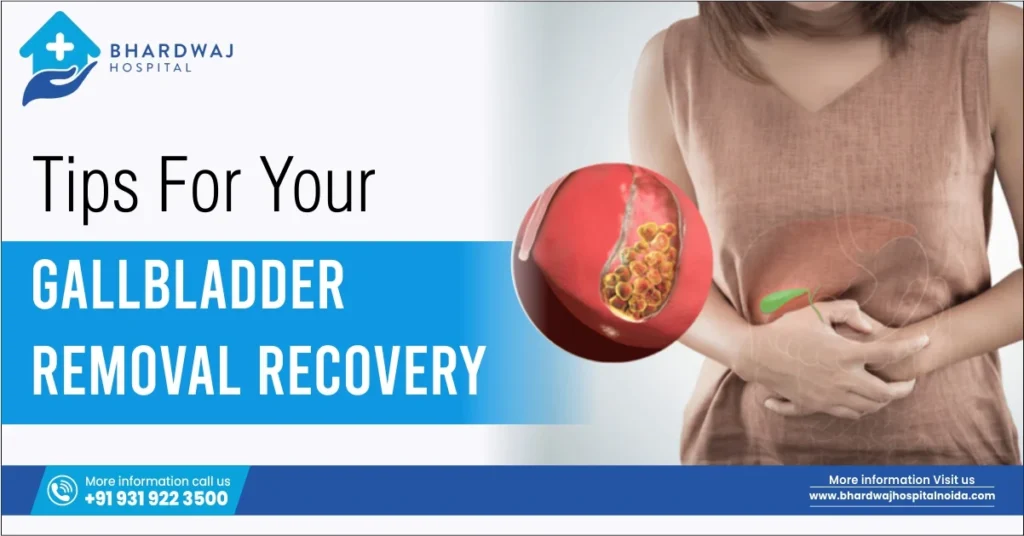
Undergoing a gallbladder removal surgery, or cholecystectomy, is a fairly common surgical procedure. However, every surgery comes with its fair share of anxiety in the patient’s mind.
“How will the recovery be like?” “When can I return to work?” etc. are the questions that linger in the minds of the people scheduled for the surgery. Recovery after the surgery plays a key role in how quickly you regain comfort and normal function.
If you are curious to unfold more details about gallbladder removal recovery, our experts at Bhardwaj Hospital will clarify all your questions and doubts.
Gallbladder Removal and What It Involves?
Even before we discuss recovery after gallbladder removal, it is vital that you know what the surgery is, what it involves and what to expect down the road.
Gallbladder removal is usually done when gallstones or inflammation occur in this small organ. If timely intervention isn’t done, it can block bile flow, causing pain and digestive issues. Thus, surgical removal becomes a necessity. Now, cholecystectomy or gallbladder removal can be categorised into two types:-
- Laparoscopic cholecystectomy
- Open cholecystectomy
Which of the two would be a more beneficial approach for you is determined by our surgeons at Bhardwaj Hospital after the initial consultation and diagnostic tests.
The Recovery Timeline: Understanding What to Expect?
The gallbladder removal recovery time is usually a subjective experience, and the recovery is also heavily dependent on the type of surgery you are undergoing.
Here’s a quick overview of the recovery timeline for both open and laparoscopic gallbladder removal:
| Recovery Milestone | Laparoscopic Cholecystectomy (Minimally Invasive) | Open Cholecystectomy (Traditional) |
| Hospital Stay | Same-day discharge or short 24-hour stay. | Typically, 3 to 5 days. |
| Incision Size | 3 to 4 small ‘keyhole’ incisions (usually less than 1 cm each). | One larger incision (often 4 to 6 inches) in the upper right abdomen. |
| Initial Discomfort | Incision pain and temporary shoulder pain (due to retained gas). | More significant pain around the larger incision site. |
| Resuming Light Activity | Start walking immediately. Can resume light office work within 1 to 2 weeks. | Needs more time for rest. Can resume light activities after 2 to 4 weeks. |
| Driving | Usually cleared after 1 week, provided you are off narcotic pain medication and can react quickly without pain. | Often restricted for 2 to 3 weeks due to the larger incision and core muscle involvement. |
| Avoid Heavy Lifting | Generally restricted for 2 to 4 weeks. | Restricted for 6 to 8 weeks. |
| Full Recovery & Strenuous Activity | Complete healing and return to all strenuous exercise usually takes 4 to 6 weeks. | Complete healing and return to strenuous activity takes 6 to 8 weeks or longer. |
Every aspect of the gall bladder operation recovery will be conveyed to you and your family or caregiver in detail by our surgeons at Bhardwaj Hospital. You will also be scheduled for follow-up consultations to monitor how you are healing and then make required adjustments to your daily life in the future (living without a gallbladder).
How to Take Care of the Incision After Gallbladder Surgery?
After you have undergone gallbladder removal surgery, one of the key complications is incisional infection. If you don’t do proper wound care, it can lead to risks of infections and further delay the healing process.
The following are a few tips for you to keep in mind:
● In most cases, you can remove the surgical dressings after 24 to 48 hours, as advised by your doctor. You may shower the day after surgery, but gently pat the incision sites dry; do not rub them.
● Another key factor is to avoid submerging the wounds. This means no baths, hot tub or swimming for at least two weeks, or until your surgeon gives you clearance.
● If you feel itching, inflammation, or pus formation around the incision, these could be early signs of infection. Don’t brush these aside and instead consult your surgeon immediately for further management.
● You might be tempted to pick at the adhesive straps around the incision or the dissolving stitches, but avoid doing that since it increases the risk of infections significantly.
Cholecystectomy recovery is heavily reliant on incision care, so following these few tips should help you heal optimally and without any concerns.
When Is the Right Time to Resume Movement and Activity?
Rest is important, but gentle movement is essential for a healthy recovery. It helps improve blood circulation, which aids healing, and reduces the risk of blood clots and post-surgical complications, especially after surgery. Here’s what our surgeons suggest at Bhardwaj Hospital during gall bladder op recovery time:-
- Start walking around the house as soon as you are able, often on the day of or the day after your surgery. You can slowly increase the distance you walk each day.
- The last thing you want is to push yourself beyond your limits. If you find that an activity is causing you pain and discomfort, avoid doing that immediately.
- Heavy lifting post-surgery, especially until you have fully recovered, is a huge no. Do not lift anything heavier than 10 pounds for up to 4 weeks, minimum. Unnecessarily straining your abdominal muscles can not only cause pain but also increase the risk of a hernia.
- Depending on the nature of your job, you may be able to return in one to two weeks after laparoscopic surgery. If your job involves manual labour, you will need to wait longer. You’d have to discuss the dos and don’ts regarding this with your surgeon at Bhardwaj Hospital.
What Kind of Dietary Adjustments are Needed during Gallbladder Surgery Recovery?
Beyond incisional care and activity, your diet is also a crucial part of the gall bladder removal recovery period. What you eat has a direct influence on how your body heals and recovers.
The following are a few tips to follow:
| Phase/Category | Focus | Specific Foods & Recommendations |
| Initial Phase (First 24-48 Hours) | Clear & Bland | Clear liquids (broth, water, diluted fruit juice). Gradually progress to bland, low-fat solids (plain toast, crackers, plain rice, oatmeal). |
| Long-Term Foods to EMBRACE | Low-Fat & High-Fiber | Lean Proteins: Chicken breast, fish (cod, tuna), turkey, tofu. Low-Fat Dairy: Skim milk, fat-free yoghurt, low-fat cheese. Whole Grains: Oats, brown rice, whole-wheat bread. Fruits & Vegetables: All varieties (increase fibre slowly over weeks). |
| Foods to LIMIT or AVOID (Initial 4-6 Weeks) | High-Fat & Irritants | High-Fat/Fried Foods: French fries, fried chicken, bacon, sausages, rich gravies, pastries. High-Fat Dairy: Whole milk, butter, full-fat cheese, cream. Irritants: Excessive caffeine, alcohol, very spicy foods, and heavily processed/greasy snacks. |
| Eating Strategy | Small, Frequent Meals | Aim for 5-6 small meals or snacks throughout the day instead of 3 large ones. |
You don’t have to make drastic changes, but these small yet significant dietary adjustments will surely help heal your body after your gallbladder surgery.
Healing after Gallbladder Removal Surgery!
Gallbladder removal surgery is a common procedure that brings profound relief from the pain and discomfort of gallstones. A successful recovery hinges on diligent post-operative care, including proper wound management, gradual reintroduction of activity, and mindful dietary adjustments.
With the right support, you can heal smoothly and avoid complications. At Bhardwaj Hospital, Noida, we ensure every patient receives individual attention, from the first consultation to the final recovery milestone.
Contact Bhardwaj Hospital today to book your appointment and begin your journey to a pain-free life.









 Message us on Whatsapp
 Call us 93192 23500
 info@bhardwajhospitalnoida.com
 Locate us on Google Maps
 Book Appointment