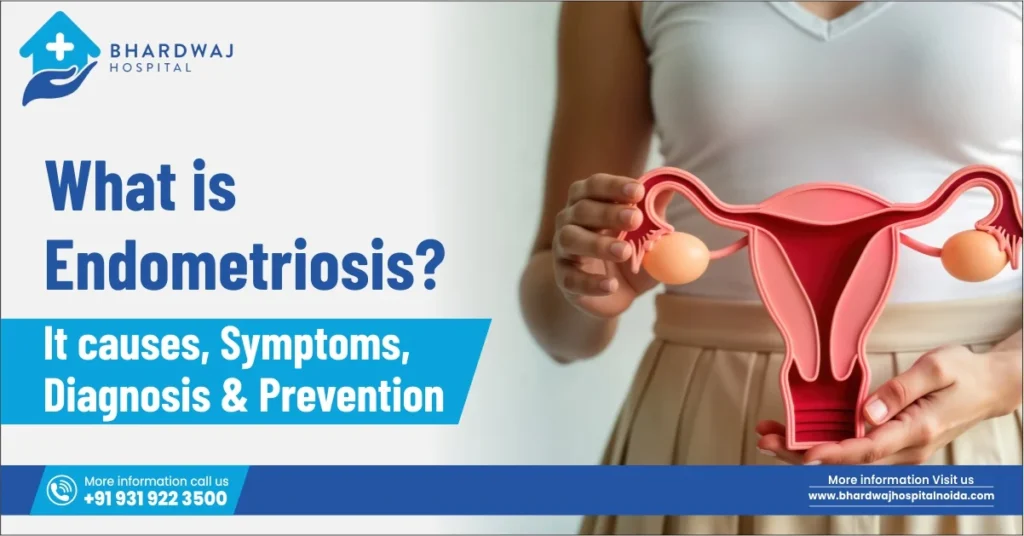
Picture a biological mutiny in your body where the uterus lining, whose sole purpose is life nurturing, goes rogue and colonizes territories where it simply doesn’t belong. This is the world of endometriosis. It occurs when tissues that are strikingly similar to the uterus lining break rank and anchor themselves over the bowel walls or the pelvic floor.
It is far from a crampy or a bad period, rather a condition that acts like a ghost in the gynaecological system of your body. All these displaced cells react to the hormonal signals every month, thicken, and bleed, just like they do within the womb. It has no escape plan, and the trapped blood gives rise to silent firestorm inflammation. It is a master of disguise, often claimed as a basic ovarian discomfort while it weaves a complicated web of chronic pain and resilience.
If you are experiencing persistent pain in your abdomen, do not rely on self pain relief medication; instead, book an appointment with our gynaecologists at Bhardwaj Hospital, one of the best hospital in Noida.
What is Endometriosis?
Endometriosis is a painful condition in which tissues in the inner lining of the uterus develop outside of the uterus. It influences the ovaries, the fallopian tubes, and the tissue lining of the pelvis. Although it is rare, endometriosis growths can be observed beyond the area where pelvic organs are located. Endometriosis tissue mainly acts as a lining inside the uterus, which thickens, breaks down, and bleeds in every menstrual cycle. So, when endometriosis grows into the ovaries, it forms cysts called endometriomas.
Symptoms of Endometriosis
Being a woman with endometriosis is like having to maneuver within a complex terrain of physiological problems that go beyond the menstrual cycle, and one such problem is endometriosis. Below are some of the symptoms that indicate that there is a possibility you have developed endometriosis.
-
Painful periods
Due to endometriosis, you will experience beyond pelvic pain and cramping (dysmenorrhea) that typically begins before and continues during menstruation. However, many individuals also suffer from continuous lower back and stomach discomfort throughout their period.
-
Pain with sex
It is a common and unpleasant manifestation of this medical condition, experiencing pain during or after sexual intercourse. Therefore, physical difficulties can also have a significant impact on the relationships between people and their emotional well-being on a general level.
-
Pain with bowel movements or urination
Pain is not necessarily limited to your sexual or menstrual activity; it extends to general physiological activities. You will have sharp pain in your abdomen during bowel movements or urination. These notable symptoms are most prone to intensification just before and after your menstrual period.
-
Heavy period flow
If your period flow rate is excessive, then most likely you have endometriosis. Even in certain cases, people experience unexpected bleeding or small blood spotting between regular monthly cycles.
-
Infertility
In most cases, endometriosis is first diagnosed while examining the causes of infertility among women. This occurs because internal scarring disrupts the natural processes required for a successful conception.
-
Other symptoms
Endometriosis also comes with fatigue, bloating, and nausea, especially before and during the menstrual period.
Causes of Endometriosis
The actual etiology of endometriosis remains complicated, involving a combination of biological, environmental, and physiological factors. Clinical research claims that various primary mechanisms contribute to the development of this persistent condition.
-
Retrograde Menstruation
This condition is the most broadly accepted reason for endometriosis. It mainly occurs when your menstrual blood flows backward through the fallopian tube into the pelvic area. Consequently, discarded cells attach to the pelvic organ and slowly grow. However, many women experience retrograde flow without development of this disease, suggesting that other factors also play a major role here.
-
Genetic Factors
Medical evidence strongly claims that if your family has a history of developing this condition, then you are also most likely to experience it. Genetic conditions make certain women more vulnerable to cell proliferation. Furthermore, gene mutations are connected to inflammation and cellular edema, which appear more frequently in affected patients.
-
Immune System Dysfunction
If your immune system is healthy, then it identifies and destroys misplaced endometrial tissues within the abdominal cavity. However, due to dysregulation of immune conditions, it allows those cells to intervene, causing multiple issues. This lack of surveillance leads to constant inflammation and painful lesions.
-
Hormonal Imbalance
If your 17β-estradiol goes beyond the normal level, it leads to endometriosis. This is caused by imbalanced estrogen and progesterone, which leads to the enlargement of endometrial tissue. Hormone regulation is, therefore, an important factor in the disease progression.
-
Surgical Scar Implantation
There are instances of C-sections in which the endometrial cells cling to the surgical openings accidentally. Thus, following this surgery, these growths of the endometrial tissues entangle with the scar tissues, forming regionalized lesions reacting to the menstrual cycle. If you notice any of the following symptoms persistently, then without ignoring, consult expert gynecologists in Bhardwaj Hospital.
Diagnosis of Endometriosis
The establishment of an endometriosis diagnosis requires a systematic clinical mechanism combining the medical history of the patient with advanced diagnostic techniques. To experience world class diagnostic precision, visit Bhardwaj Hospital, where our gynaecologists use advanced technology to ensure fast and smooth recovery.
-
Medical History and Symptom Assessment
Your diagnostic journey for endometriosis starts with a complete evaluation of the menstrual history and symptomatic patterns. Gynaecologists keep a record of how and when the pelvic pain occurs and where it is felt. In addition, they also observe relative aspects like dyspareunia and gastrointestinal distress periodically. This primary step helps to differentiate the condition from other pelvic related conditions.
-
Pelvic examination
After this, a thorough pelvic examination is conducted where gynaecologists identify physical irregularities. A lubricated tool known as a speculum is placed softly in the vagina to separate the vaginal walls so that the cervix can be clearly seen. With this technique, gynaecologists understand the size, shape, mobility of the ovaries and uterus, decoding possible conditions of endometriosis.
-
Imaging Tests
Beyond physical examination, gynaecologists also go for imaging tests, including transvaginal ultrasound and magnetic resonance imaging. Ultrasound is the primary diagnostic procedure to identify endometriosis. At the same time, MRI offers an extensive and detailed view to detect deep infiltration of the endometriosis across the pelvic ligament. These non-surgical methods are significant for planning and mapping surgeries.
-
Laparoscopy
It is the best diagnostic procedure, although minimally invasive. Patients undergoing diagnosis of endometriosis are kept under general anesthesia. Then the gynaecologist inserts a small camera set on a tube through a tiny abdominal incision. This allows a perfect visualization of the possibilities of endometrial implants and also collects tissues for biopsy. This technique provides full confirmation of the presence of endometriosis.
-
Biomarkers and Blood Tests
Not all patients are fine with the least invasive diagnostic surgeries, so certain biomarkers and blood tests are convenient for them. Gynaecologists then go for the CA 125 blood test to diagnose endometriosis. Furthermore, they also focus on identifying distinct protein patterns to offer a non-surgical diagnostic path.
Preventive Measures of Endometriosis
Endometriosis cannot always be prevented completely, but particular lifestyle and medical approaches can considerably decrease the risk. All these measures are directed at regulating the inner body environment and hormone stimulators.
-
Hormonal Regulation
The main cause of endometriosis is the hormone estrogen that thickens the uterine lining. One therefore requires normal hormonal balance to avoid excessive proliferation of endometrial-like tissue. In order to curb these variations, gynaecologists prefer to prescribe low doses of the birth control or progesterone treatment. Such therapies are capable of averting the development of new lesions through the effective lowering of circulating estrogen.
-
Healthy Diet
Systemic inflammation and hormonal metabolism are also the key factors that can be controlled by nutrition. A high-fatty acid diet of omega-3 and antioxidants helps the body to deal with inflammatory triggers. Moreover, augmenting fiber consumption helps the liver to process and get rid of excess estrogen. This can also be achieved by avoiding highly processed foods and reducing red meat, which the condition needs to survive.
-
Regular Exercise
Exercise is one way of ensuring that the body fat and blood circulation are under control. Fat cells produce a greater amount of estrogen, and therefore, with physical activity it maintains a healthy level. Besides, workouts will assist in releasing endorphins, which are natural painkillers. This immunostimulatory effect increases the immune system’s ability to destroy the misplaced cells before they anchor.
-
Stress Management
Repeated stress increases the amount of cortisol, and this frequently disrupts the balance of reproductive hormones. Therefore, yoga or deep-breathing exercises are clinically advised. These practices also help in the regulation of the endocrine system and lower the overall inflammatory response. Dealing with stress will help the body to endure the physical burden of hormonal changes.
-
Early Medical Intervention
The best intervention to stop the progression is the prompt management of irregular cycles or long-standing pelvic pain. Consultation at an early phase also allows the implementation of the management plans to be done before major scarring or adhesions. Gynaecologists are able to track alterations and modify the treatments to safeguard your reproductive health in the long run.
Conclusion
Endometriosis is a serious health condition that involves high clinical accuracy and individual strength. Losing the way in the labyrinths of chronic pain and hormonal changes is frustrating, not to mention the absence of a clinical roadmap. However, the awareness of the biological cause and the first symptoms can help individuals cope with their health. It is possible to deal with endometriosis with the assistance of an accurate diagnosis, a healthy lifestyle, and special medical treatment. Your current ovarian health should be given priority so that you can restrict the development of endometriosis. Bhardwaj Hospital has one of the best gynaecological facilities, successfully treating hundreds of women with endometriosis for decades. Visit our hospital and experience high-quality care right from consultation to follow up sessions.













 Call us 9811666123
 info@bhardwajhospitalnoida.com
 Locate us on Google Maps
 Book Appointment