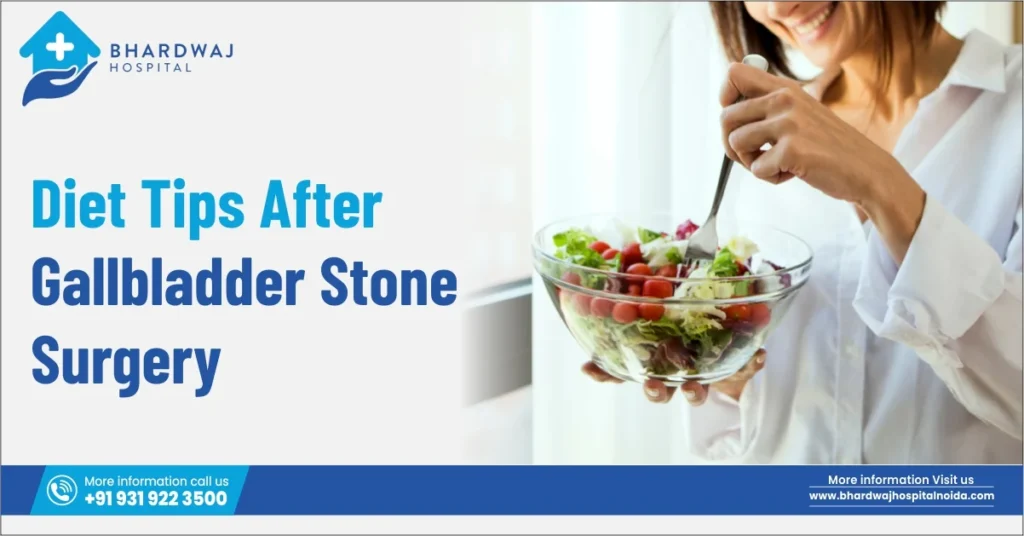
Surgical operation for gallbladder stones is a popular operation, which provides long-term pain, nausea, and digestive discomfort relief in the case of gallstones present. Nevertheless, the body does not adapt instantly to the changes in the bile flow and digestion after the surgery. This is the reason why proper diet intake is very crucial in the recovery process.
Some foods can make one bloat or have loose stools or cramps in the stomach when they are introduced too fast. A post-surgery diet is to be preserved in balance and help to heal, digest, and avoid causing any superfluous pain.
Bhardwaj Hospital offers personalized solutions for recovery after gallstone surgery to the patients by providing postoperative dietary recommendations that help the patient to achieve a long-term improved digestive status.
Why Diet Matters After Gallbladder Stone Surgery
The gallbladder plays an important role in the digestive system since it stores and secretes bile. The digestive liquid, produced by the liver, which helps in the digestion of fats in the food delivered, is called bile. In the case of surgery to remove gallstones, the bile is not held in one position when the gallbladder is removed. Rather, it empties straight into the small intestine through the liver.
This modification can be trivial to hear, but it influences the process of digestion of fatty food by the digestive system. The lack of the bile secreted by the gallbladder can make the body unable to process large portions of fats at once. This may result in such symptoms as bloating, diarrhea, gas, nausea, or postprandial discomfort.
Diet is something necessary since the digestive system requires time to get used to it. During the initial weeks of the post-surgery period, the stomach and the intestines will be hypersensitive. Consumption of heavy or oily food too soon would worsen symptoms and slow the recovery. However, it is possible to make a healthy choice and eat light, nutrient-rich foods to ensure that the body will heal faster and will not be irritated.
An appropriate postoperative diet following the removal of the gallbladder also benefits normal bowel movements and aids in the reduction of the inflammation of the digestive system. With time, the majority of people can resume a normal diet, although it is simpler to recover when the food options are well thought out and do not occur immediately.
Most Effective Diet Tips After Gallbladder Stone Surgery
Here are the most effective diet tips and a list of foods to eat after gallbladder removal:
Choose Low-Fat Foods to Support Digestion
When the gallbladder is removed, the digestion of fats is complicated due to the slow and constant flow of bile rather than being stored and discharged in large chunks at the time of meals. It is the reason why low-fat foods are highly suggested in the recovery process. Consuming oily food or fried food could result in loose stools, cramps, and nausea.
Choose low-protein food items that contain boiled chicken, fish, egg white, dal, and tofu. Include steamed vegetables and soups, rice and light homemade meals. Better cooking methods than frying are grilling, baking and steaming. Simultaneously, a systematic low-fat diet plan that is followed by doctors at Bhardwaj Hospital in the first stages of recovery is prescribed in order to enhance the process of healing and to alleviate digestive discomfort.
Include High-Fiber Foods for Gut Health
Fiber is also useful in enhancing postoperative digestion. It helps in the management of bowel movements and reduces the chances of diarrhoea due to the gallbladder removal. Soluble fiber is especially beneficial because it binds bile acids and makes the stool more solid. Some of the high-fiber foods include oats, bananas, apples, carrots, papaya, and whole grains, as well as lentils.
Nevertheless, fiber is to be introduced slowly. The sudden increase in fiber intake leads to gas and bloating. Begin with little but gradually build up. The diet based on high fiber also promotes long-term gut health, and it also helps one to maintain a healthy weight, which is significant to the overall digestive stability.
Stay Hydrated and Use Digestive-Friendly Fluids
Postoperative hydration is necessary since the body should be provided with fluids to heal, digest, and avoid constipation. Sufficient water intake also allows the digestive system to adapt to the change in bile and allows it to move its bowels readily. Use water, coconut water, clear soups, and herbal teas.
The soft drinks, canned juices, and too much caffeine should also be avoided because they irritate the stomach and will increase bloating. Fluids that are warmed are likely to be more bearable during the initial recovery. At Bhardwaj Hospital, the post-surgery recovery education involves hydration planning to avoid dehydration and enhance the promotion of digestive comfort.
Eat Small, Frequent Meals Instead of Heavy Meals
After removing the gallbladder, it can be overburdened by large meal portions, particularly when the food contains fats. Since bile is no longer released in huge bursts, heavy meals may cause discomfort, bloating or diarrhea. Instead, eat small meals every 3-4 hours. This enables the intestine to digest food more easily with the available bile.
Small meals can also be used to maintain the stability of energy and decrease the unexpected load on digestion. Digestion is further enhanced by slowing down the pace of chewing food and consuming it thoughtfully. The meal size may gradually be reduced, although in the initial weeks, smaller meals may form one of the most effective interventions in assisting recovery and reducing symptoms.
Foods and Habits to Avoid or Use With Caution
Foods that are known to aggravate the digestive system after gallbladder surgery should not be consumed within a few weeks after the surgery. Natural foods, Fried foodstuff, oily curries, high butter meals, and fast foods can cause loose feces and aches. Dairy products containing a high quantity of fat, like full cream milk, cheese and ice cream, can also be uncomfortable. Spicy foods should be limited as they can upset the stomach lining and worsen the acidity.
Drinks that are carbonated, alcohol and excess caffeine are to be avoided since they contribute to gas and stomach upsets. One should also avoid eating processed snacks, packaged food, and sweet desserts because they contribute to inflammation and slow down healing. As a rule, never miss meals and do not eat too much. One can also bloat when they eat too fast. An informal, normal diet helps the digestive system to recover in a far simpler manner.
Conclusion
Diet plays a major role in the management of the surgery for gallbladder stones. Slow consumption of the fibers, low-fat foods, proper hydration, and decreasing the portion size help the body to adapt to the changes in the bile and improve digestion. Bhardwaj Hospital provides full-fledged recovery after gallstone surgery to achieve comfort in the long-term with professional care and nutrition advice.









 Call us 9811666123
 info@bhardwajhospitalnoida.com
 Locate us on Google Maps
 Book Appointment