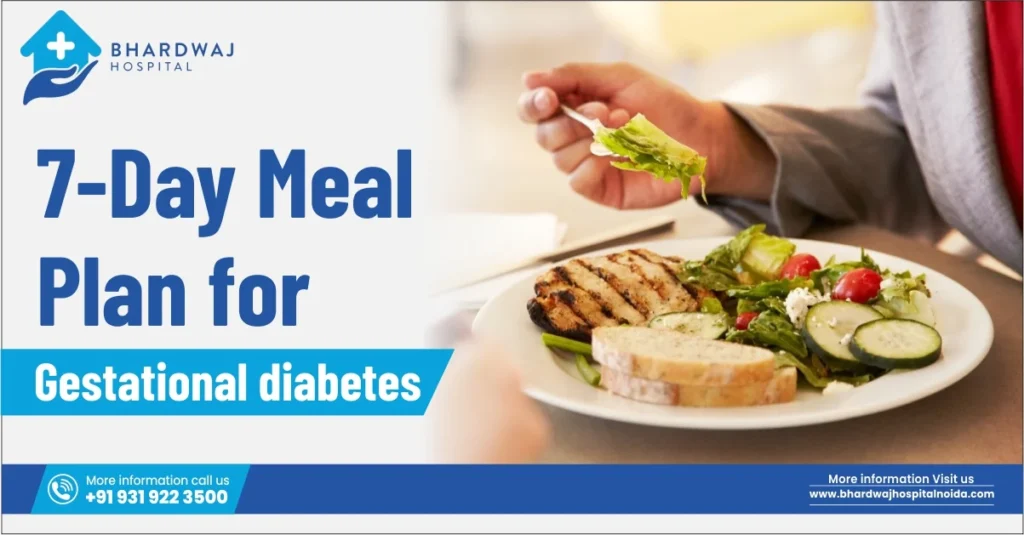
Gestational diabetes is a disease that develops in the blood sugar level during pregnancy, and the management of such a disease is significant to the health of the mother and the baby. Even though medication and insulin may be required in some cases, a properly considered diet is a secret behind the treatment of this condition.
The strategy of following a prescribed 7-day meal plan for gestational diabetes can stabilise the level of glucose, prevent complications, and enable healthy foetal growth. Indian cuisine can also provide balanced nutrition without increasing the blood sugar levels, as prudently chosen Indian food can be listed. With the assistance of professional supervision, gestational diabetes can be treated successfully at Bhardwaj Hospital.
Understanding the Role of Diet in Managing Gestational Diabetes
Diet is a significant aspect in the management of gestational diabetes. Owing to the likelihood of hormonal alterations during the course of pregnancy, the body fails to process glucose effectively, causing the level of blood sugar to increase. The control of glucose absorption, improvement of insulin sensitivity, and spike prevention should be achieved with the help of a balanced diet.
Why a Structured Meal Plan Matters for Managing Gestational Diabetes?
It is highly important to have a structured meal plan for managing gestational diabetes. Small meals taken frequently, in place of big meals, are beneficial in ensuring that there are regular blood sugar levels throughout the day. Snacks in between meals can help avoid hypoglycemia, but will not lead to overeating (nuts, yoghurt, roasted legumes, etc.). Thus, following a structured plan can help reduce glucose levels and cravings, thereby aiding in the management of gestational diabetes.
What are the Key Components of a Diabetic Diet for Moms-to-Be?
For moms-to-be, it is recommended to consume foods with a low glycemic index (GI), moderate carbohydrates, and adequate protein, along with sufficient fiber intake. The benefits are brought well through the consumption of traditional Indian foods like lentils, whole grains, vegetables, and fruits in measured portions. It is also necessary to be hydrated, and warm water or herbal drinks can help with digestion and metabolic rates.
Also Read: Gestational Diet Plans Complete Indian
Although diet can be very effective in the control of blood sugar, some women still may need to be put under medical care or use insulin. Regular checks on the level of glucose and an individual diet plan guarantee the best results for the mother and baby. Our doctors at Bhardwaj Hospital develop personalised meals to address the needs of an individual, integrating the advantages of traditional Indian foods with clinical guidance on managing pregnancy safely.
7-Day Indian Meal Plan for Gestational Diabetes
Here is an Indian diabetic diet chart 7-day meal plan suggested by our specialists at Bhardwaj Hospital.
Also Read: Pregnancy Sugar (Gestational Diabetes): Diet Chart & Care Guide
Day 1 Meal Plan
Start the day by taking a glass of warm water and a handful of soaked almonds because these are good fats and fibre to get sugar levels back to normal. In order to have something in the morning, one can have a plate of vegetable oats upma or moong dal chilla, which is a complex carbohydrate and a source of protein. Eat an apple/ guava, which are low-GI fruits, in the middle of the morning to maintain constant glucose levels. Lunch can include brown rice or whole wheat chapati and a mixture of vegetables and dal, which is a balance of carbohydrates, fibre, and protein in equal proportion. You will need to prepare roasted chana or a buttermilk glass to have a snack in the evening without increasing the level of sugar in the blood. The evening meal should be light, i.e., a bowl of vegetable soup with sauteed vegetables, which will aid in digestion and glucose level at night.
Day 2 Meal Plan
Put warm water that has soaked methi seeds at the beginning of the day, as this is said to help in controlling glucose levels. One can have multigrain toast with paneer bhurji for breakfast, as this is not only a high-protein food but also a low-refined-carb food. In the midday, eat papaya or a pear, as it is a natural sweetener and a source of fibre. Chapati with lauki sabzi and curd is a good source of low GI meal to have at lunch. An evening snack of sprouts chaat provides protein and micronutrients and maintains the blood sugar levels constant. Dinner may be moong dal khichdi with vegetables added in, which is a wholesome and easy-to-digest meal.
Day 3 Meal Plan
Get the morning going with warm water and a few moist walnuts to supply healthy fats and the required nutrients. Breakfast may consist of ragi dosa that comes with vegetable sambar, which is a combination of slow-digesting carbs and protein to provide lasting energy. In mid-morning, an orange or a handful of berries is good in terms of antioxidants and fibre. Lunch may be chapati, bhindi sabzi, and dal, which provide the required balance of nutrients without spiking blood sugar. Small portions of peanuts can be used as evening snacks as a source of protein and satiety. For dinner, have a vegetable stir-fry with paneer, which provides good-quality protein and fibre and is a great low-GI meal.
Day 4 Meal Plan
Start the day with warm water containing the powder of flax seeds, which helps in digestion and the maintenance of glucose. Foods, such as Poha cooked with vegetables, can be eaten as breakfast since they are both filling and low-GI. At mid-morning, take a fresh apple to keep the energy levels high. This can include lunch: rice with rajma and a salad to provide protein, fibre, and slow carbohydrates. Protein and satisfaction. Evening snacks can comprise buttermilk with roasted makhana. One meal that can be a light, nutritious, and easy-to-digest dinner is a clear vegetable soup and chapati.
Day 5 Meal Plan
Not only do warm water and wet almonds help in digesting and controlling blood sugar, but they should also be the first thing in the morning. A vegetable paratha that has been cooked with a small amount of oil and served with curd as a source of protein and probiotics can serve as breakfast. Mid-morning, a guava will give fibre and vitamins without raising the level of glucose to a significant extent. Lunch can consist of chapati and palak paneer and a fresh salad, which is a good source of protein, fiber, and micronutrients. Roasted chana can be taken as an evening snack, but it is a low-carb, high-protein snack. The food that one should eat in the evening includes steamed vegetables and dal, which make the meal easy to digest and healthy at the same time.
Day 6 Meal Plan
Begin the day with warm water containing chia seeds that aid in the consumption of fiber and maintenance of a steady glucose level. Protein and slow-digesting carbohydrates can be combined in the form of breakfast served with vegetable sambar. In the middle of the day, papaya may be taken in for vitamins and soft sweetness. Lunch can consist of chapati, tinda sabzi, and dal, which do not contribute to sudden spikes in blood sugar levels. Protein and probiotics can be combined by using unsweetened fruit yoghurt as evening snacks. Dinner may take the form of a light meal of veggie khichdi that is light and does not trigger spikes in glucose levels overnight.
Day 7 Meal Plan
Daily drink warm water in the morning and eat a handful of soft nuts that will supply healthy fats and much-needed nutrients. Protein and fibre can be provided through breakfast since a besan chilla cooked with vegetables can be used. In the middle of the day, have a pear to maintain the energy level. A lunch can be brown rice and chole with fresh salad, which contains low-calorie carbs and protein. Roasted makhana can also be used as an evening snack because it is a low-calorie and high-protein snack. Light vegetable curry can be served at dinner time with chapati, which is a nutritious and light meal that is easy to digest.
Also Read: When to See a Diabetes Specialist in Noida
Final Thoughts
The Indian diabetic diet list based on specific nutrition is the key to the management of gestational diabetes. Vitality, measures of portions, and standard surveillance of blood sugar are vital. One-on-one instructions by competent doctors guarantee a healthy condition of the mother and infant. At Bhardwaj Hospital, our team of specialists offers dietary support for safe, balanced gestational diabetes management.















 Call us 9811666123
 info@bhardwajhospitalnoida.com
 Locate us on Google Maps
 Book Appointment